
PRACTICE AREA

Paragard IUD Claims in Los Angeles

A Paragard IUD that broke during removal, reviewed from a downtown Los Angeles office by attorney Bejan Broukhim.

How a Los Angeles Paragard claim works.

If a Paragard IUD broke during removal and left a piece behind, you may need a Paragard lawyer in Los Angeles who will read the removal records, trace what followed and bring the claim against the manufacturer. Broukhim Legal PC reviews Paragard claims for people across Los Angeles County and California, and attorney Bejan Broukhim personally reviews each matter.

On this page: Key takeaways · Why choose Broukhim Legal PC · Who may have a Paragard claim · What Paragard lawsuits allege · Records to gather · Deadlines to file · What compensation may be sought · What a Paragard lawyer costs · Mass tort claims across Los Angeles County

Key takeaways

  • The claims concern the copper IUD that fractured during removal, leaving a fragment behind. Removal without incident is not the issue.
  • The removal appointment itself generates the record: the removal note, the imaging, and any procedure to retrieve the fragment.
  • A recall is not the test. A device can be defectively designed, made or labelled without ever being recalled.
  • These claims run against the manufacturer, not your clinician, because the allegation is that the device itself was prone to fracture.
  • You generally have two years to file, but the clock can run from when the injury and its cause were, or should have been, discovered.
  • Broukhim Legal PC takes Paragard cases on a contingency fee: nothing up front, and no fee unless we recover for you.

Why choose Broukhim Legal PC for your Paragard case?

  • Direct access to your lawyer. Bejan Broukhim personally reviews your case and leads its strategy. You can speak directly with him about your matter, and if another law firm is ever brought in, that happens only with your written consent.
  • Years of experience, fully licensed. Bejan Broukhim brings years of experience in California injury and mass tort law and holds an active California law license, State Bar number 183036.
  • The records tell the story. We collect the insertion note, the removal note, the imaging and the operative reports, including records that sit in more than one place.
  • We look beyond the removal note. Breakage is sometimes recorded first in an imaging report, a later operative report or a referral letter, so the whole file is read.
  • No fee unless we recover for you. You pay nothing up front, and if nothing is recovered you owe no fee.
  • Ready for court. Every case is prepared from day one as though it will go to trial.

Who may have a Paragard claim?

Paragard is the copper intrauterine device. It is non-hormonal, it can stay in place for years, and for most people it is removed without incident. These claims are about the ones that were not: devices whose plastic arms snapped during removal and left a piece behind. A review is worth doing if your removal involved any of the following:

  • A removal note saying the device fractured, an arm was missing, or a part could not be located.
  • Imaging, hysteroscopy or laparoscopy ordered to find a fragment.
  • A second procedure under anaesthetic to retrieve a piece, including one that had moved outside the uterus.
  • Ongoing pain, bleeding, infection or perforation, or fertility problems, after removal.
  • A hysterectomy, in the most serious outcomes.

Many women left the appointment thinking nothing had happened, because they were told a small piece had broken off and would pass on its own. That comment, made in passing and often in English, is why these cases are frequently identified years later.

What do Paragard lawsuits allege?

The device is a small T-shaped frame of polyethylene wound with copper wire. The allegation is that the frame can become brittle while it sits in the body, that the arms can fracture under the ordinary force used to remove it, and that neither patients nor clinicians were adequately warned. The manufacturers named in these cases include Teva and CooperSurgical. A claim generally alleges one of three things, and these are allegations to be proved, not assumptions:

  • Defective design. The device was unreasonably dangerous as designed.
  • Defective manufacture. This particular unit was manufactured badly.
  • Inadequate warnings. The risk of breakage on removal was known and not adequately communicated.

These claims are usually brought against the manufacturer, on the basis that the device itself was prone to fracture, not on the basis that the clinician did anything wrong. If the records suggested a clinical error you would be told, because that is a different kind of case with different rules and a different deadline. Under California’s pure comparative fault rule, partial fault reduces a recovery and does not bar it, and where a company acted with malice, oppression or fraud, Civil Code section 3294 allows punitive damages.

What records should you gather for a Paragard claim?

  • The insertion note and the removal note, which says whether the device came out whole or was fractured.
  • Imaging taken afterwards, such as ultrasound or hysteroscopy findings.
  • Operative reports for any procedure to retrieve a fragment.
  • Follow-up records for treatment of pain, infection, bleeding or fertility problems.
  • Both sets of records if insertion and removal happened at different places, including a community clinic, a county clinic, Family PACT or Medi-Cal.

Whether a retained fragment was ever recovered matters, and so does whether it is still in place. We request the records for you, in Spanish if you prefer, at no cost up front.

How long do you have to file a Paragard claim?

California allows two years from the injury for most personal injury claims, under Code of Civil Procedure section 335.1, usually running from the failed removal. Where a retained fragment was only identified later, the delayed discovery rule can start the two years from when the injury and its likely cause were, or should have been, discovered. If a public entity such as a county clinic was involved, a written claim generally has to be presented within six months under Government Code section 911.2, and that shorter deadline governs. Have your dates assessed against the actual records rather than assuming either way.

What compensation may be sought in a Paragard case?

  • Medical expenses, past and future, including imaging, retrieval procedures and ongoing care.
  • Lost earnings and loss of future earning capacity.
  • Pain, suffering and emotional distress, and the loss of enjoyment of life.
  • Punitive damages under Civil Code section 3294 where the facts show malice, oppression or fraud.

No outcome can be promised, and the value of a claim cannot be known before the medical picture is clear. This is not a class action. Each claim stays separate, built on that person’s own device, removal and outcome. Where a coordinated proceeding exists, a filed claim joins it.

How much does a Paragard lawyer cost in Los Angeles?

No fee unless there is a recovery. Broukhim Legal PC takes injury and mass tort matters on a contingency fee, so there is nothing to pay up front and the fee is paid out of what is recovered. If nothing is recovered, no fee is owed. The fee agreement is put in writing and signed before any work starts, as Business and Professions Code section 6147 requires, and the costs of running the case are explained in that same agreement. Your first conversation is free, confidential and carries no obligation.

Paragard claims for clients across Los Angeles County

Broukhim Legal PC takes mass tort claims for clients throughout Los Angeles County from its office at 550 S Hill Street in downtown Los Angeles. These cases are consolidated in federal or state court rather than heard locally, so where you live does not limit the claim. This sits alongside our other implant work, including hernia mesh, port catheters and other medical devices. See all mass torts we review, or choose your city:

See all locations we serve, or tell us about your removal for a free case review.

Meet your Los Angeles Paragard lawsuit lawyer
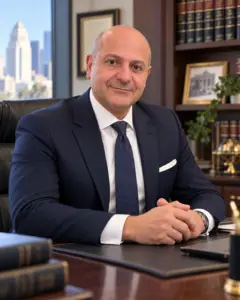
Bejan Broukhim, personal injury lawyer at Broukhim Legal PC

Bejan Broukhim, Founder and Lead Attorney
State Bar of California, license number 183036

Bejan Broukhim brings years of California legal experience to injury and mass tort cases and personally reviews each one. He earned his J.D. at the University of West Los Angeles School of Law, served as a judicial extern in the U.S. Bankruptcy Court and the Van Nuys Superior Court, and appeared in preliminary hearings as a certified law clerk with the Los Angeles County District Attorney’s Office. Every case is prepared from day one as though it will go to trial.

Office: 550 S Hill Street, Suite 1390, Los Angeles, CA 90013, serving all of Los Angeles County and California. Get directions

Paragard problems we review in Los Angeles

HOW IT WORKS

Our process.

1

Consultation

A confidential first conversation. We review the facts, tell you where you stand, and set out the realistic options.

2

Strategy

Scope and fees agreed in writing, then a plan built from day one as if the matter will go to trial.

3

Resolution

We negotiate from a position of strength, and litigate aggressively when that is what your interests require.

FREE CASE REVIEW

See if a claim can be reviewed.

Takes 30 seconds. Confidential, and no obligation.

Confidential. No obligation. Submitting does not create an attorney-client relationship. By submitting, you agree that Broukhim Legal PC may contact you about your inquiry by phone, text or email. Message and data rates may apply. Reply STOP to opt out of texts. Consent is not a condition of hiring the firm.

COMMON QUESTIONS

Paragard claims, answered plainly.

Possibly. A fragment retrieved in the same appointment is a better outcome than most, but it still means an unplanned procedure, and a review looks at what it involved, whether anaesthetic was needed, and what followed. A short answer cannot be given without the notes.

Worth checking the rest of the file. Breakage sometimes appears first in an imaging report, in the operative report for a later procedure, or in a referral letter rather than in the removal note itself. The records request looks across all of it, not just the one page.

California allows two years from the injury for most personal injury claims under Code of Civil Procedure section 335.1, usually running from the failed removal, with California’s discovery rules applying where a retained fragment was only identified later. Have yours assessed against the actual dates rather than assuming either way.

The question is what happened at removal. These claims generally involve a device that fractured on the way out, a fragment left behind, and the imaging, hysteroscopy, laparoscopy or further surgery needed to deal with it. The insertion note, the removal note, the imaging and the operative report for any retrieval procedure are what settle it, and breakage is sometimes recorded somewhere other than the removal note. The claim runs against the manufacturer rather than against your clinician. The first conversation is free, confidential and carries no obligation, and the scope of the work and the fees are agreed in writing before anything starts.

A recall is not the test. A device can be defective in design, defective in manufacture, or inadequately labelled without ever being recalled, and a recall would not by itself prove that your device caused your injury. The analysis runs on the device, the removal, the timing and the records either way.

Usually not. These claims are brought against the manufacturer on the basis that the device itself was prone to fracture, not on the basis that the clinician did anything wrong. If the records suggested a clinical error you would be told, because that is a different kind of case with different rules and a different deadline.

You will be asked for the specifics: roughly when the device was inserted and removed, where, what happened at the removal, any procedure that followed, and authorisation to collect your records. Those records are reviewed and you are told candidly whether the claim proceeds. If it does, it is filed, and where a coordinated proceeding exists it joins that.

General information about California law, not legal advice, and no attorney-client relationship is created by reading it. Deadlines and outcomes turn on the facts of your own matter, so have yours reviewed. By submitting, you agree that Broukhim Legal PC may contact you about your inquiry by phone, text or email. Message and data rates may apply. Reply STOP to opt out of texts. Consent is not a condition of hiring the firm.

READY TO BEGIN?

Talk to Bejan Broukhim.

Stand up to corporate negligence. Contact the firm’s mass tort team for a free, confidential case evaluation.

FREE CONSULTATION

Tell us about your matter.

A short, confidential review. We will tell you plainly whether there is something worth pursuing.

Confidential. No obligation. Submitting does not create an attorney–client relationship.