
PRACTICE AREA

Pedestrian Accident Lawyer in Los Angeles

For people struck while walking or cycling in Los Angeles. Attorney Bejan Broukhim personally reviews every matter from the first conversation.

How a Los Angeles pedestrian accident claim works.

If you were hit while walking in Los Angeles, you need a pedestrian accident lawyer in Los Angeles who knows that the crosswalk, the driver’s duty and the road itself are all in play. Broukhim Legal PC represents injured pedestrians across Los Angeles County and California, and attorney Bejan Broukhim personally reviews each case.

On this page: Key takeaways · Why choose Broukhim Legal PC · What to do after being hit · Who is liable · What insurance pays · What compensation you can recover · Deadlines to file · What a pedestrian accident lawyer costs · Pedestrian accident lawyers by city

Key takeaways

  • A crosswalk does not have to be painted. At most intersections an unmarked crosswalk exists by operation of law, so being told you were not in a crosswalk is often simply wrong.
  • Vehicle Code section 21950 requires a driver to yield to a pedestrian in a crosswalk, and the driver’s right of way does not relieve them of the duty to use due care.
  • California applies pure comparative fault: a share of blame reduces a recovery but does not end it.
  • You generally have two years to file, but only six months to present a claim if a city, county or the state is involved, such as for a missing signal or an unlit crossing.
  • Broukhim Legal PC takes pedestrian cases on a contingency fee: nothing up front, and no fee unless we recover for you.

Why choose Broukhim Legal PC for your Los Angeles pedestrian accident case?

  • Direct access to your lawyer. Bejan Broukhim personally reviews your case and leads its strategy. You can speak directly with him about your case, and if another law firm is ever brought in, that happens only with your written consent.
  • Years of experience, fully licensed. Bejan Broukhim brings years of experience in California injury law and holds an active California law license, State Bar number 183036.
  • The crosswalk rules, applied. The rules on unmarked crosswalks and a driver’s duty decide most of these cases, and the insurer will usually say the opposite. The claim is built around the statute from the first day.
  • Hit and run and road conditions covered. Where the driver is never identified, the claim often runs through your own coverage. Where the road itself contributed, a public agency can be added within the shorter deadline.
  • No fee unless we recover for you. You pay nothing up front, and if nothing is recovered you owe no fee.
  • Ready for court. Every case is prepared from day one as though it will go to trial, so any settlement offer is measured against a case that is ready to be tried.

What should you do after a pedestrian accident in Los Angeles?

  1. Get medical care the same day, even if you walked away. Adrenaline hides injuries, and a gap in treatment is the first thing an insurer points to.
  2. Call the police and get the report number. If the driver left, give every detail you remember: the vehicle, the plate, the direction.
  3. Photograph the scene: the crossing, the signals, the lighting, any broken pavement and your injuries.
  4. Get witness names and numbers, and look for cameras on nearby businesses, because video is often overwritten within days.
  5. Keep your shoes, clothing and phone in the condition they were in.
  6. Do not give a recorded statement to the driver’s insurer, and do not sign anything, until you have spoken to a lawyer.

Who is liable for a pedestrian accident in California?

Vehicle Code section 21950 requires a driver to yield to a pedestrian crossing within any marked crosswalk or within an unmarked crosswalk at an intersection. That second half is the part almost nobody knows: in California an unmarked crosswalk exists at most intersections whether or not lines were painted, so you were crossing legally on most corners of Los Angeles even with no stripes on the road.

The statute cuts both ways. A pedestrian may not suddenly leave the curb into the path of a vehicle close enough to be an immediate hazard, and drivers often argue that happened. But the same section says a driver’s right of way does not relieve them of the duty to exercise due care. Possible responsible parties include:

  • The driver who failed to yield, speeding, or was distracted or turning without looking.
  • An employer, when the driver was working, such as delivery vans and commercial vehicles.
  • Uber or Lyft, through layered coverage that depends on whether the app was off, waiting or carrying a passenger.
  • A public agency, for a missing signal, an obscured sightline, broken pavement or an unlit crossing, under Government Code section 835. These claims carry the six month deadline.
  • A manufacturer, when a defective vehicle part caused or worsened the impact.

Since January 2023, under the Freedom to Walk Act, crossing outside a crosswalk is no longer a citable offense in California unless there is an immediate danger of a collision. Many drivers and adjusters still talk as if it were illegal. Crossing mid-block can still lead to a share of fault under comparative fault, but that share reduces compensation and does not eliminate it, and the burden stays on the driver who did not see a person in plain view.

What insurance pays after a pedestrian accident?

California’s minimum liability limits are $30,000 per person and $60,000 per accident, which is far below what a serious pedestrian injury costs. The value of a claim depends on finding the other layers:

  • The driver’s liability policy, and any umbrella policy above it.
  • Your own uninsured and underinsured motorist coverage. In a hit and run where the driver is never identified, the claim usually runs against this coverage on your own auto policy, and many people do not realize it reaches them as a pedestrian.
  • Medical payments coverage, which can pay early bills regardless of fault.
  • Employer and commercial policies, when the driver was working.
  • Health insurance, which pays treatment as it happens and may later claim reimbursement from a settlement.

What compensation can you recover after a pedestrian accident?

  • Medical expenses, past and future, including surgery, therapy and long term care.
  • Lost earnings and loss of future earning capacity.
  • Pain, suffering and emotional distress, and the loss of enjoyment of life.
  • Punitive damages under Civil Code section 3294 where the driver acted with malice, such as in a drunk driving crash.
  • Wrongful death damages for the family under Code of Civil Procedure section 377.60 when a collision is fatal.

A case’s value cannot be known before the medical picture is clear. Pedestrian cases in Los Angeles are rarely minor, because wide arterial roads, long distances between signalized crossings and heavy turning traffic produce severe injuries.

How long do you have to file a pedestrian accident claim in California?

  • Two years from the date of injury to file an injury lawsuit, under Code of Civil Procedure section 335.1.
  • Three years for property damage only, under Code of Civil Procedure section 338.
  • Six months to present a written claim if a public entity is involved, under Government Code section 911.2. This shorter deadline governs.

Under Los Angeles Superior Court Local Rule 2.3(a)(1)(A), an unlimited civil injury or wrongful death action is filed in the judicial district where the incident arose, so a collision in the county is not filed downtown by default. The Court’s filing locator identifies the courthouse.

How much does a pedestrian accident lawyer cost in Los Angeles?

No fee unless there is a recovery. Broukhim Legal PC takes pedestrian accident cases on a contingency fee, so there is nothing to pay up front and the fee is paid out of what is recovered. If nothing is recovered, no fee is owed. The fee agreement is put in writing and signed before any work starts, as California law requires, and it also explains how the costs of running the case are handled. Your first conversation is free, confidential and carries no obligation.

Pedestrian accident lawyers across Los Angeles County

Broukhim Legal PC represents people hit while walking throughout Los Angeles County from its office at 550 S Hill Street in downtown Los Angeles. Each city page covers the local police or Sheriff report, the courthouse that hears the case and how a claim against that city is presented:

See all locations we serve, or tell us about the collision for a free case review.

Meet your Los Angeles pedestrian accident lawyer
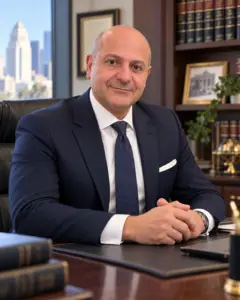
Bejan Broukhim, personal injury lawyer at Broukhim Legal PC

Bejan Broukhim, Founder and Lead Attorney
State Bar of California, license number 183036

Bejan Broukhim brings years of California legal experience to injury and mass tort cases and personally reviews each one. He earned his J.D. at the University of West Los Angeles School of Law, served as a judicial extern in the U.S. Bankruptcy Court and the Van Nuys Superior Court, and appeared in preliminary hearings as a certified law clerk with the Los Angeles County District Attorney’s Office. Every case is prepared from day one as though it will go to trial.

Office: 550 S Hill Street, Suite 1390, Los Angeles, CA 90013, serving all of Los Angeles County and California. Get directions

Pedestrian accident cases we take on in Los Angeles

HOW IT WORKS

Our process.

1

Consultation

A confidential first conversation. We review the facts, tell you where you stand, and set out the realistic options.

2

Strategy

Scope and fees agreed in writing, then a plan built from day one as if the matter will go to trial.

3

Resolution

We negotiate from a position of strength, and litigate aggressively when that is what your interests require.

FREE CASE REVIEW

Tell us what happened.

Takes 30 seconds. Confidential, and no obligation.

Confidential. No obligation. Submitting does not create an attorney-client relationship. By submitting, you agree that Broukhim Legal PC may contact you about your inquiry by phone, text or email. Message and data rates may apply. Reply STOP to opt out of texts. Consent is not a condition of hiring the firm.

COMMON QUESTIONS

Pedestrian questions, answered plainly.

Usually not. California recognises unmarked crosswalks at most intersections by operation of law, and Vehicle Code section 21950 requires drivers to yield in those exactly as in painted ones. Being told there was no crosswalk is one of the most common and most incorrect things an adjuster says in these cases. Where you actually were, relative to the intersection, is the question worth establishing early.

Report it, and move fast on footage. Nearby businesses, residential doorbell cameras and traffic cameras overwrite within days, and that recording is often the only route to identifying the vehicle. Separately, uninsured motorist coverage on your own auto policy usually reaches you as a pedestrian or cyclist, even though you were not in your car, which surprises most people. It has its own notice requirements, so it is worth checking the policy immediately.

Generally two years from the date of injury under Code of Civil Procedure section 335.1. But if the condition of the road, the pavement, the lighting or a signal is part of what happened, a public entity is in the case and Government Code section 911.2 requires a written claim within six months. Because that is easy to miss and fatal when missed, have the date confirmed at the outset.

Three things decide it: whether the driver failed to use reasonable care, what the medical record shows, and whether there is insurance that reaches the loss. Being outside a painted crosswalk does not by itself end a claim, and neither does a driver insisting you stepped out suddenly, because California apportions fault rather than cutting a claim off at the first sign of it. Bring the traffic collision report if one was made, photographs of the intersection, the names of anyone who treated you, and your own auto policy, because uninsured motorist coverage can reach a pedestrian struck by a driver who carried nothing. The first conversation is free, confidential and carries no obligation.

It is the standard argument, and it is sometimes true. Section 21950 does say a pedestrian must not leave a kerb into the path of a vehicle that is close enough to be an immediate hazard. The same section also says having the right of way does not relieve a driver of the duty to exercise due care. So it is a question of distance, speed and sightlines, argued on evidence rather than conceded because an adjuster asserted it.

The framework is the same, with its own rules layered on. A cyclist has the rights and duties of a driver on the roadway, bike lane rules apply, and dooring is dealt with by Vehicle Code section 22517. The practical difference is that cycling cases more often involve a road surface defect or a badly designed lane, which can bring a public entity and the six-month deadline into play.

Usually some combination of your health insurance, medical payments coverage under your own auto policy if you carry it, and providers willing to wait for payment out of the eventual recovery. The driver’s insurer does not pay bills as they arrive; it pays once, at the end. Those interim payers may then have a right to be reimbursed out of the settlement, which has to be negotiated before you see a net figure.

General information about California law, not legal advice, and no attorney-client relationship is created by reading it. Deadlines and outcomes turn on the facts of your own matter, so have yours reviewed. By submitting, you agree that Broukhim Legal PC may contact you about your inquiry by phone, text or email. Message and data rates may apply. Reply STOP to opt out of texts. Consent is not a condition of hiring the firm.

READY TO BEGIN?

Talk to Bejan Broukhim.

Protect your future with years of California legal experience on your side.

FREE CONSULTATION

Tell us about your matter.

A short, confidential review. We will tell you plainly whether there is something worth pursuing.

Confidential. No obligation. Submitting does not create an attorney–client relationship.