
PRACTICE AREA

Bard PowerPort Claims in Los Angeles

Port catheter fracture, migration and infection, reviewed from a downtown Los Angeles office by attorney Bejan Broukhim.

How a Bard PowerPort lawsuit works.

If a Bard PowerPort or another implanted port fractured, shifted or had to be taken out early, you may be searching for a Bard PowerPort lawsuit lawyer in Los Angeles. Broukhim Legal PC reviews implanted port claims for people across Los Angeles County and California, and attorney Bejan Broukhim personally reviews each case.

On this page: Key takeaways · Why choose Broukhim Legal PC · Who may have a claim · What the lawsuits allege · What records to gather · Deadlines to file · What compensation may be sought · What a lawyer costs · Related claims and locations

Key takeaways

  • These claims concern port catheters sold by Bard Access Systems under names including PowerPort, PowerPort ClearVUE, PowerPort isp, PowerPort M.R.I. and SlimPort.
  • A claim is usually identified from a specific event: a fractured catheter, a fragment that migrated, early removal because of infection or clotting, or treatment that was interrupted.
  • If the removed port was kept, say so early. It can be the single most valuable piece of evidence in the case.
  • California generally allows two years to file an injury lawsuit, and for injuries that appear later the clock can run from when the injury and its likely cause were, or should have been, discovered.
  • This is not a class action. Each claim is built on one person’s own device and outcome, and Broukhim Legal PC takes these cases with no fee unless we recover for you.

Why choose Broukhim Legal PC for your Bard PowerPort case?

  • Device cases built on records. A port claim is proved with the implant record, the imaging and the removal report, so the early work is gathering those documents and protecting the explanted device.
  • Direct access to your lawyer. Bejan Broukhim personally reviews your case and leads its strategy. You can speak directly with him about your case, and if another law firm is ever brought in, that happens only with your written consent.
  • Years of experience, fully licensed. Bejan Broukhim brings years of experience in California personal injury and mass tort law and holds an active California law license, State Bar number 183036.
  • Careful about what is only alleged. You get a plain account of what the litigation alleges, what is still contested and what your own records show, without promises about the outcome.
  • No fee unless we recover for you. You pay nothing up front, and if nothing is recovered you owe no fee.
  • Ready for court. Every case is prepared from day one as though it will go to trial, so any settlement offer is measured against a case that is ready to be tried.

Who may have a Bard PowerPort claim?

An implanted port is the small device placed under the skin of the chest so that chemotherapy, antibiotics or other long-term medication can be delivered without finding a vein each time. The people who need one are usually already seriously ill, which is exactly why a device that fails is so costly.

These claims are usually identified from a specific event rather than from a gradual decline. You may have a claim worth reviewing if any of the following happened:

  • The catheter fractured, or imaging showed that part of it broke or moved out of place.
  • A fragment migrated into the heart or the lung and had to be retrieved.
  • The port had to come out early because of infection or clotting.
  • Treatment was interrupted or had to be delivered another way.
  • You had months of repeated infections, clots, chest or neck pain or swelling, and nobody connected them to the device.

Almost nobody arrives knowing the port was the problem. It is common to have spent months on infections, antibiotics and replaced devices without anyone mentioning the device itself. If the person who had the port has died, the family may also have a claim, and you should ask before assuming otherwise.

What do Bard PowerPort lawsuits allege?

The catheter tubing is a polyurethane material with barium sulfate added so that it shows up on imaging. The allegation is that the barium sulfate was not evenly distributed, that it can separate from the surrounding material inside the body, and that this leaves the tubing weakened and liable to crack, fracture or shed fragments.

What a claim generally alleges is one or more of the following:

  • The catheter was unreasonably dangerous as designed.
  • This particular unit was manufactured badly.
  • The risks were known and not adequately communicated to patients and doctors.

Those are allegations to be proved, not assumptions. Whether your port fits depends on the device you had and what happened to it, which is why the review starts with your records rather than with the theory.

What records should you gather for a Bard PowerPort claim?

Each of the complications above appears in the medical record with a date, which is what makes the file workable. The records that matter are:

  • The implant record naming the device and usually the lot, and the card you were given at placement if you still have it.
  • The imaging that showed the fracture or the migrated fragment. A broken piece can remain in the body, and it can show on an X-ray or a CT scan.
  • The operative or interventional radiology report for the removal or retrieval.
  • The notes for each infection or clot, and for what the complication cost in delayed treatment.

If the port has been removed or replaced, ask the hospital in writing to keep the device. Explanted catheters are often discarded as a matter of routine, and one that is preserved can be examined in a laboratory, which is direct evidence of the defect. We request the rest of the records ourselves.

How long do you have to file a Bard PowerPort lawsuit?

Under Code of Civil Procedure section 335.1, an injury lawsuit in California generally has to be filed within two years. For injuries that appear later, the two years can run from when the injury and its likely cause were, or should have been, discovered, so the date of the fracture, the removal or the diagnosis can matter. Those facts differ from one patient to the next, so have your date reviewed early rather than assuming time remains.

If the person who had the port has died, Code of Civil Procedure section 377.60 sets out who may bring a wrongful death claim. These cases are consolidated in federal or state court rather than heard locally, so where you live in Los Angeles County does not limit the claim.

What compensation may be sought in a Bard PowerPort case?

  • Medical expenses, past and future, including the retrieval or removal procedure, treatment of infection or clotting and any replacement.
  • Lost earnings and loss of earning capacity.
  • The cost of delayed or disrupted treatment for the illness the port was meant to serve.
  • Pain, suffering and emotional distress.
  • Punitive damages under Civil Code section 3294 where the evidence shows malice, oppression or fraud.
  • Wrongful death damages for the family where a patient has died.

What a claim is worth cannot be known before the records are reviewed. It turns on the complication, the treatment that followed and the evidence tying the injury to the device.

How much does a Bard PowerPort lawyer cost in Los Angeles?

No fee unless there is a recovery. Broukhim Legal PC takes Bard PowerPort cases on a contingency fee, so there is nothing to pay up front and the fee is paid out of what is recovered. If nothing is recovered, no fee is owed. The fee agreement is put in writing and signed before any work starts, as California law requires, and it also explains how the costs of running the case are handled rather than leaving that to the end. Your first conversation is free, confidential and carries no obligation.

Related claims and where we help

This sits alongside the firm’s other implant work, including hernia mesh, Paragard IUDs and other medical devices. Broukhim Legal PC takes mass tort claims for clients throughout Los Angeles County from its office at 550 S Hill Street in downtown Los Angeles. See all mass tort cases and the locations we serve, or tell us about your port for a free case review.

Meet your Los Angeles Bard PowerPort lawsuit lawyer
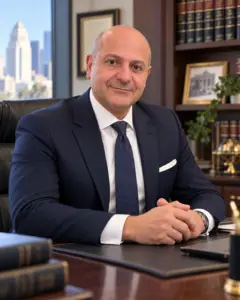
Bejan Broukhim, personal injury lawyer at Broukhim Legal PC

Bejan Broukhim, Founder and Lead Attorney
State Bar of California, license number 183036

Bejan Broukhim brings years of California legal experience to injury and mass tort cases and personally reviews each one. He earned his J.D. at the University of West Los Angeles School of Law, served as a judicial extern in the U.S. Bankruptcy Court and the Van Nuys Superior Court, and appeared in preliminary hearings as a certified law clerk with the Los Angeles County District Attorney’s Office. Every case is prepared from day one as though it will go to trial.

Office: 550 S Hill Street, Suite 1390, Los Angeles, CA 90013, serving all of Los Angeles County and California. Get directions

Bard PowerPort problems we review in Los Angeles

HOW IT WORKS

Our process.

1

Consultation

A confidential first conversation. We review the facts, tell you where you stand, and set out the realistic options.

2

Strategy

Scope and fees agreed in writing, then a plan built from day one as if the matter will go to trial.

3

Resolution

We negotiate from a position of strength, and litigate aggressively when that is what your interests require.

FREE CASE REVIEW

See if a claim can be reviewed.

Takes 30 seconds. Confidential, and no obligation.

Confidential. No obligation. Submitting does not create an attorney-client relationship. By submitting, you agree that Broukhim Legal PC may contact you about your inquiry by phone, text or email. Message and data rates may apply. Reply STOP to opt out of texts. Consent is not a condition of hiring the firm.

COMMON QUESTIONS

PowerPort claims, answered plainly.

Most people do not, and it is recoverable. The operative report and the hospital’s implant log name the device, usually with a lot number, and a records request will reach them. Not knowing the brand is not a reason to decide you have no claim.

Possibly not, and you should be told that honestly. A planned removal at the end of treatment is not an injury. These claims turn on a failure: a fracture, a migrated fragment, an infection, a clot, or a removal that was not supposed to happen. If none of that is in your record, a review will say so.

California allows two years from the injury for most personal injury claims under Code of Civil Procedure section 335.1, usually running from the complication rather than from the implantation, with California’s discovery rules applying where the cause was not apparent at the time. A wrongful death claim runs from the date of death. Have yours assessed against your records.

It depends on whether the record shows a failure with a date attached: a fractured catheter, a fragment that migrated and had to be retrieved, an infection or a clot, a port removed earlier than planned, or treatment delayed because the device stopped working. The implant record naming the device and usually its lot number, the imaging, and the removal or retrieval report are the documents that answer it, and a records request reaches them even when you do not know the brand. A planned removal at the end of treatment is not an injury. The first conversation is free, confidential and carries no obligation, and the scope of the work and the fees are agreed in writing before anything starts.

A recall is not the test. A device can be defective in design, defective in manufacture, or inadequately labelled without ever being recalled, and a recall would not by itself prove that your particular port caused your particular injury. The analysis runs on the device, the complication, the timing and the records either way.

It is dealt with directly rather than avoided. The defence will argue that an unwell patient was always at higher risk of infection and clotting, and the records are read with that in mind. The question is what the device did on top of the underlying illness, which is a causation question for expert evidence, not a reason to stop before asking.

You will be asked for the specifics: when and where the port was placed, which hospital and physician, what went wrong and when, any retrieval or replacement procedure, and authorisation to collect your records. Those records are reviewed, including the implant record that identifies the device, and you are told candidly whether the claim proceeds. If it does, it is filed, and where a coordinated proceeding exists it joins that.

General information about California law, not legal advice, and no attorney-client relationship is created by reading it. Deadlines and outcomes turn on the facts of your own matter, so have yours reviewed. By submitting, you agree that Broukhim Legal PC may contact you about your inquiry by phone, text or email. Message and data rates may apply. Reply STOP to opt out of texts. Consent is not a condition of hiring the firm.

READY TO BEGIN?

Talk to Bejan Broukhim.

Stand up to corporate negligence. Contact the firm’s mass tort team for a free, confidential case evaluation.

FREE CONSULTATION

Tell us about your matter.

A short, confidential review. We will tell you plainly whether there is something worth pursuing.

Confidential. No obligation. Submitting does not create an attorney–client relationship.